Sports guide
A Fan Guide to Defensive Help and Recovery
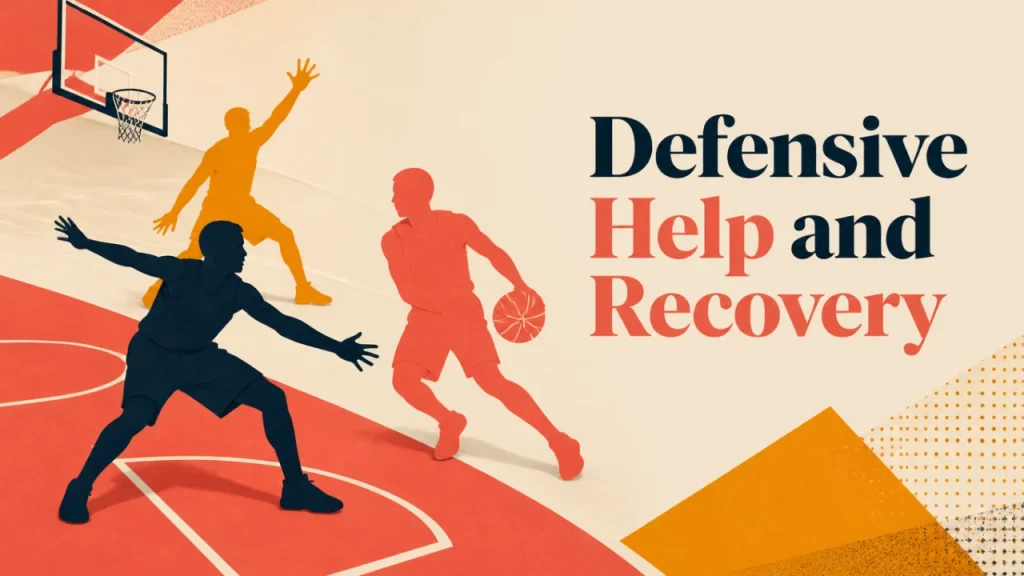
In basketball, understanding defensive help and recovery is key to appreciating effective team play. These are not merely individual efforts but coordinated actions that allow a defense to adapt to offensive threats and maintain strong positioning. When one defender is beaten, others step in to prevent easy scoring opportunities, a concept known as ‘help defense’. Following this, the ‘recovery’ phase ensures that all defenders return to their assigned players or areas, preventing open shots or drives.
What is Defensive Help?
Defensive help refers to a defender leaving their assigned player for a short period to assist a teammate who is being beaten by an offensive player. This action is crucial for disrupting the opponent’s offensive flow and protecting the basket. It’s a fundamental aspect of team defense, preventing easy layups or dunks when an individual defender is outmaneuvered.
The Importance of Help-Side Positioning
Effective help defense begins with proper help-side positioning. This means defenders without the ball on their side of the court should position themselves away from their assigned player, closer to the basket or in a ‘gap’ between offensive players. This strategic placement allows them to react quickly and provide support if a teammate guarding the ball handler is beaten. For instance, if an offensive player drives aggressively towards the basket, a defender positioned on the help side can step in to cut off the drive or challenge a shot.
- Discouraging Drives: Help defenders make offensive players think twice about driving directly to the basket, knowing a second defender might be waiting.
- Protecting the Paint: By having defenders ready to step in, teams can prevent easy scores close to the rim, forcing opponents into more difficult shots.
- Forcing Turnovers: Well-timed help can lead to offensive players losing control of the ball or making ill-advised passes, resulting in turnovers.
Understanding Defensive Recovery
While providing help is vital, the defense is incomplete without effective recovery. Defensive recovery is the process of a help defender returning to their original assignment or a new assignment after providing assistance. This must be done quickly and efficiently to prevent the offense from capitalizing on the temporary mismatch created by the help defense.
Key Aspects of Successful Recovery
Successful recovery requires communication, awareness, and quick movement. A defender who provides help must immediately identify where their original assignment has moved or if a new offensive player has become open. The goal is to close out on the open offensive player, deny an easy pass, or get back into proper defensive stance.
- Communication: Teammates must communicate who is helping and who needs to recover to prevent confusion and leave an offensive player open.
- Quick Feet and Awareness: Defenders need to sprint back to their assignments, keeping their eyes on both the ball and their player.
- Contesting Shots: Upon recovery, the defender should be in a position to contest any shot taken by their assigned player.
Hypothetical Scenario: Help and Recovery in Action
Imagine a scenario where an offensive player with the ball drives past their primary defender along the baseline. A help defender, positioned in the paint, steps over to cut off the drive and forces the offensive player to pick up their dribble or pass. As this happens, the primary defender who was initially beaten sprints back to recover, while the help defender quickly shifts to cover the now open offensive player on the perimeter, preventing an easy three-point attempt. This seamless transition from helping to recovering demonstrates a well-executed defensive sequence.
Mastering both defensive help and recovery allows a team to build a resilient defense that can withstand individual breakdowns and maintain overall defensive integrity throughout the game.
AI-generated illustrative image. It does not depict a real match.